NARX Neural-Network Robotic Arm Control
[One or two sentences: what the controller did, and what the hardware was for.]
- Year
- 2024 – 2025
- Status
- Published — Springer, 2025
- Context
- Research internship, Department of Aerospace Engineering, Toronto Metropolitan University
- Role
- Control implementation, test hardware, co-author
- Stack
- MATLAB · Python · SolidWorks
- Publication
- Springer Lecture Notes in Electrical Engineering, Vol. 1468
What it does
[What the controller does — what it learns, and what it sends to the arm.]
[Why a NARX network rather than a conventional controller.]
How it works
[The mechanism: inputs, outputs, training data, and the path from network to motor.]
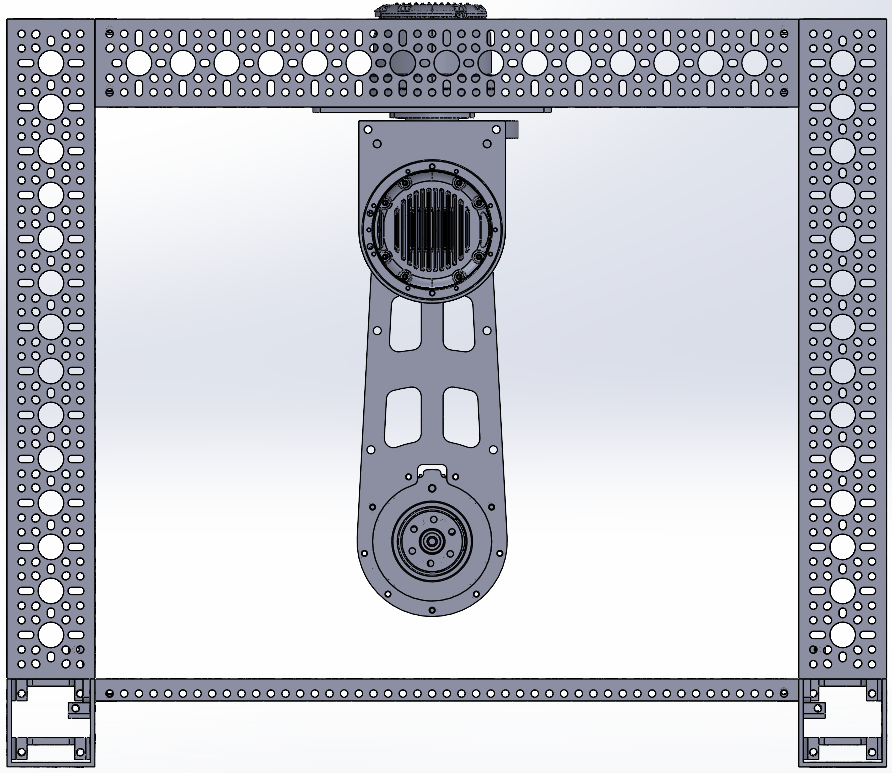
The test hardware
[Why the arm needed a fixture of its own.]
[What the fixture measured, and what counted as agreement between commanded and measured motion.]
What I built
- [The control implementation.]
- [The validation hardware.]
- [Your part in the paper and the presentation.]
Publication and presentation
| Paper | “NARX Neural Network–Based Control of Robotic Arm” |
|---|---|
| Venue | Springer Lecture Notes in Electrical Engineering, Vol. 1468 (2025) |
| Presented | IEEE IEMTRONICS 2025 — Best Presenter Award |
[Optional: anything worth saying about the conference, or delete this paragraph.]
Limitations and what comes next
- [A real limitation.]
- [What you would do differently.]